
Contextual link building is one of those terms that sounds technical at first but actually describes something quite simple: earning links to your website from within the natural body of relevant articles, rather than from footers, sidebars, or unrelated directory listings. If you are trying to grow an audience for your website and want that growth to be genuine and lasting, understanding contextual link building is one of the most useful things you can learn.
This guide walks through what contextual link building really means, why it matters so much for how search engines evaluate your site, and how you can approach it thoughtfully whether you manage the work yourself or bring in outside help.
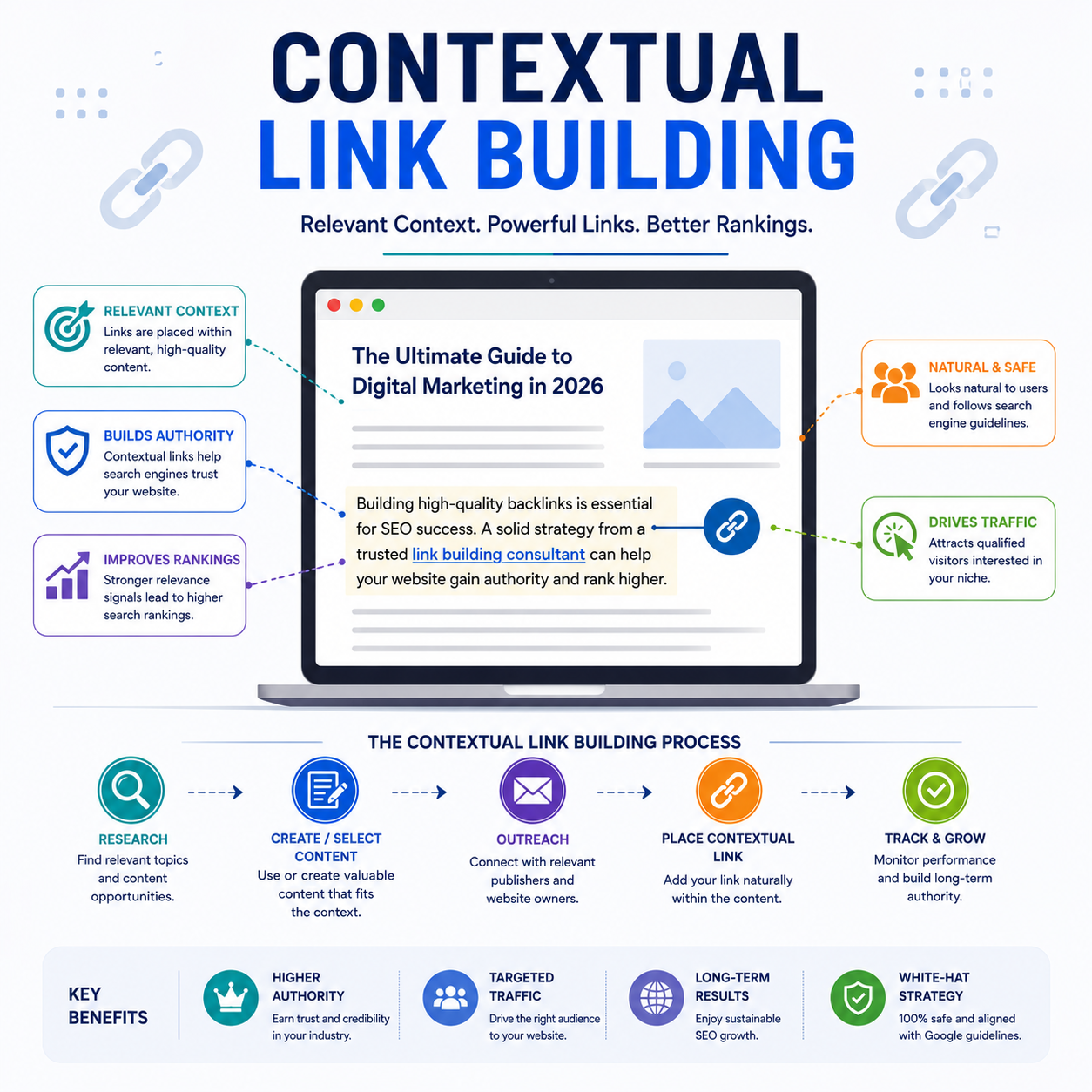
What Contextual Link Building Actually Means
When people talk about contextual link building, they are referring to backlinks placed within the actual content of a page, surrounded by relevant text that gives the link meaning. For example, if an article about healthy morning routines links to your blog post about meditation, using the words “guided meditation techniques” as the clickable text, that is a textbook example of contextual link building at work.
This is very different from a link placed in a website’s footer or a generic business directory, where there is no surrounding context to tell either readers or search engines why the link matters. Contextual link building carries far more weight precisely because it mirrors how people naturally reference useful resources while writing.
Why Search Engines Value Contextual Link Building So Highly
Search engines like Google are constantly trying to understand which pages genuinely deserve to rank for a given topic. A link buried in a sidebar tells them very little. A link placed naturally within a paragraph, surrounded by related keywords and ideas, tells them a great deal about what your page is about and why other sites consider it valuable.
This link building consistently outperforms other types of link acquisition. The surrounding text acts almost like a recommendation letter, reinforcing the topic and relevance of the page being linked to, which helps search engines confidently rank that page for related searches.
How Contextual Link Building Differs From Other Link Types
As the table shows, contextual link building consistently sits at the top of the value scale because it combines relevance, editorial trust, and genuine placement within meaningful content.
| Link Type | Where It Appears | Typical Value |
| Contextual Link | Within the body of a relevant article | High, due to surrounding relevance |
| Footer Link | Website footer, often site-wide | Low, lacks specific context |
| Directory Listing | Business or resource directories | Moderate, depends on directory quality |
| Comment Link | Blog or forum comment sections | Very low, frequently ignored by search engines |
| Sidebar Widget Link | Website sidebar, often repeated site-wide | Low to moderate |
How to Approach Contextual Link Building the Right Way
Start With Genuinely Useful Content
Contextual link building only works if your website has content worth linking to in the first place. Before pursuing outreach, take an honest look at your existing pages and ask whether they offer something genuinely more useful, detailed, or current than what is already ranking for your target topics.
Identify Truly Relevant Publications
Rather than reaching out to any website willing to accept a link, effective contextual link building focuses on publications that already write about closely related topics. A cooking blog seeking a link from a woodworking site, for instance, would not benefit from true contextual link building, since the surrounding content simply would not make sense.
Write or Pitch Content That Naturally Fits
The strongest results in contextual link building come from content specifically written to fit naturally within a target publication’s existing style and audience, rather than content that feels forced or overly promotional. Editors can tell the difference immediately, and so can readers.
Vary Your Anchor Text Naturally
A common mistake in contextual link building is repeating the exact same anchor text phrase across every placement. Search engines expect natural variation, so mixing branded terms, descriptive phrases, and occasional exact-match keywords keeps your link profile looking authentic.
Common Mistakes That Undermine Contextual Link Building Efforts
Many people attempting contextual link building on their own fall into a few predictable traps. They chase quantity over relevance, accepting any placement regardless of how well it fits the surrounding content. They ignore the quality of the site itself, focusing only on getting a link published rather than considering whether the site has genuine readers. They also frequently neglect to check whether the linking page is itself indexed and ranking, since a link from a page search engines have not indexed provides very little value.
Avoiding these mistakes is largely a matter of patience and discipline. Genuine contextual link building takes longer than shortcuts, but the resulting links tend to hold their value far longer as well.
The Long-Term Payoff of Consistent Contextual Link Building
Unlike paid advertising, which stops delivering traffic the moment the budget runs out, the results of contextual link building tend to compound over time. A single well-placed contextual link on a relevant, respected page can continue sending both direct referral traffic and ranking benefits for years after it was first published.
Websites that commit to this approach consistently, rather than in short bursts, typically see steadier keyword improvements and a more resilient overall search presence, especially during and after algorithm updates that tend to penalize sites relying on manipulative shortcuts.
Should You Handle Contextual Link Building Yourself or Get Help
Many website owners begin by attempting contextual link building on their own, which is entirely reasonable for smaller sites with the time to dedicate to outreach. However, as a website grows and the competition for valuable placements increases, the process becomes considerably more time-consuming, often requiring dozens of personalized pitches for each successful placement.
At that point, many site owners choose to bring in outside help, whether a freelancer or an agency, specifically focused on contextual link building. This allows the day-to-day work of prospecting, writing, and negotiating to continue steadily without pulling attention away from other priorities.
Tools That Can Support Your Contextual Link Building Efforts
While relationships and genuine content remain the foundation of contextual link building, a handful of tools can make the process considerably more efficient. Backlink analysis platforms can help you understand your current profile and identify which competitors are earning contextual link building placements that you have not yet pursued. Outreach tracking spreadsheets or simple software can help you stay organized as you follow up with multiple publications at once, ensuring no promising conversation slips through the cracks.
Even without paid tools, a simple spreadsheet tracking which sites you have contacted, the status of each conversation, and any resulting placements can go a long way toward keeping a contextual link building effort organized and consistent over time.
How Contextual Link Building Fits Into a Broader Content Strategy
This link building rarely succeeds in isolation from your broader content efforts. The strongest outreach campaigns are built around genuinely valuable content assets, such as original research, comprehensive guides, or unique data that other websites have a real incentive to reference. Investing time in creating this kind of content before beginning outreach dramatically increases the success rate of your contextual link building efforts, since you are offering something publishers genuinely want to share with their own readers.
Regularly revisiting and updating your best-performing content also keeps it relevant for ongoing contextual link building opportunities, since publishers are far more likely to link to a page that clearly reflects current, accurate information rather than something that appears outdated or neglected.
Frequently Asked Questions
How is contextual link building different from guest posting?
Guest posting is often one method used to achieve contextual link building, but not all guest posts include a naturally contextual link. The key factor is whether the link sits meaningfully within relevant content, regardless of the specific format used to place it.
How many contextual links does a website actually need?
There is no fixed number, since it depends heavily on your niche’s competitiveness. A useful approach to contextual link building involves studying what your top-ranking competitors have and working steadily to close that gap.
Is contextual link building safe from Google penalties?
Yes, when done properly. Genuine contextual link building follows natural, editorial placement practices, which is exactly the kind of link acquisition Google’s guidelines encourage rather than penalize.
How long does it take to see results from contextual link building?
Most websites begin noticing measurable ranking improvements within a few months, as search engines gradually discover, evaluate, and factor in the new contextual links.
Can contextual link building help a brand-new website?
Yes, though new sites typically need to start with more accessible placements before working toward larger, more competitive publications as their overall authority grows.
Conclusion
At its heart, contextual link building is simply the practice of earning genuine, relevant mentions within content that readers actually value, and it remains one of the most reliable ways to build lasting trust with search engines. Whether you tackle it yourself or bring in dedicated help, focusing on relevance, quality, and patience will always outperform shortcuts, giving your website the kind of durable authority that keeps paying off for years to come.
To discover more insights and explore our full range of resources, we invite you to visit our official website.